
1980s
A kilogram of wild cordyceps costs 1,800 yuan. (Wikipedia)
Tibetan cordyceps, lingzhi the spirit mushroom and shiitake on honey: the story of one vial in numbers, patents and legends
In brief
The story of Fohow Phoenix Elixir begins high in the mountains of Tibet. Every May, harvesters crawl up the slopes, noses almost in the grass, hunting for a mushroom that sprouts straight out of a caterpillar. In 2012 the finest of these mushrooms in Beijing shops cost twice as much as the same weight in gold. In a 30 ml vial you get a culture isolated from this mushroom, together with lingzhi (reishi) and shiitake on honey. Half a vial at breakfast, and at seven in the evening you still have the energy for a walk, dinner and a good talk with the people you love.
In Chinese the mushroom is called 冬虫夏草: “a worm in winter, a grass in summer.” It waits out the cold underground, inside the caterpillar of a ghost moth. In spring a dark little stalk pushes out of the caterpillar’s head. Tibetans call it yartsa gunbu, which in Tibetan means the same thing: “summer grass, winter worm.” Scientists call it Ophiocordyceps sinensis. It grows at altitudes of three to five thousand metres, on the mountain meadows of Tibet and Qinghai (Wikipedia).
The season lasts two months, May and June. Harvesters in Yushu prefecture comb the slopes on their knees, faces to the grass. The stalk is tiny and easy to miss. For many families it is their only income for the whole year (National Geographic).
The Tibetan physician Zurkhar Nyamnyi Dorje was the first to write down the name yartsa gunbu. In his treatise “Instructions on a Myriad of Medicines” he described the mushroom as a remedy for love and vigour.
Wang Ang adds cordyceps to the Chinese herbal Bencao Beiyao.
The physician Wu Yiluo describes it in four characters: 保肺益肾, “protects the lungs, strengthens the kidneys.”
Cordyceps has two prices. Wholesale is what middlemen pay at the market. Top-grade retail is what the choicest mushroom costs in a city shop. We compare each with gold in the same year.
1980s
A kilogram of wild cordyceps costs 1,800 yuan. (Wikipedia)
2004
The mushroom provides 40% of the cash income of rural Tibetan families and 8.5% of the region’s entire economy.
2012 · wholesale
A record wholesale price: up to 382,000 yuan per kilogram, about $60,000, according to The Wall Street Journal. Gold in July 2012 was around $51,300 per kilogram. Even at wholesale, the mushroom is 17% pricier than gold. (GoKunming, USGS)
2012 · retail
A pound of top yartsa gunbu in Beijing shops: up to $50,000, or about $110,000 per kilogram. That is more than twice the price of the same weight in gold, as National Geographic reports. (2012 article)
2013 · top grades
A kilogram costs between 125,000 and 500,000 yuan, depending on grade. Gold averaged about $1,400 an ounce that year, roughly 277,000 yuan per kilogram. The top grade is 1.8 times pricier than gold. (USGS)
2024 · top grades
National Geographic: the finest cordyceps fetches up to $110,000 per kilogram. Gold on the same day was about $65,750. The mushroom is 1.7 times pricier. (National Geographic, gold quote)
2026 · wholesale
August, Yushu market. Choice wild cordyceps goes for 137,500 yuan per half kilo, and a half kilo holds 800 pieces. That is about 170 yuan per piece, wholesale. (Xinhua price index)
Roughly how many times the price of a kilogram rose between the 1980s and 2013: from 1,800 yuan to 500,000.
How many stalks you have to find to make up one kilogram of choice mushroom. Every one of them on your knees.
The markup a middleman takes for carrying the mushroom from the mountains to the shops of Yushu. On the way to the big cities, the price climbs even higher.
One piece for 170 yuan, so where does the mushroom in an elixir box come from? From a fermenter.
Scientists isolated a culture from wild Tibetan cordyceps: the fungus Paecilomyces hepiali, in Chinese 蝙蝠蛾拟青霉. It is grown in pure form, with no caterpillars and no trips to the mountains. This culture is what works in the Phoenix vial. The factory’s own documents show it: the 2022 patent CN220489530U names the product “an oral liquid of lingzhi, xianggu and Paecilomyces hepiali” (patent).
The slopes of Tibet only win from this. The International Union for Conservation of Nature has put wild cordyceps on its Red List as a vulnerable species, and in China it is protected.
Where it growsInside a caterpillar, on the slopes of Tibet
How it is obtainedPicked by hand in May and June
OriginOphiocordyceps sinensis
SlopesVulnerable species, under protection
Where it growsIn a fermenter, in pure form
How it is obtainedGrown at the factory
OriginA strain isolated from this mushroom
SlopesLeft untouched
MarkerAdenosine: the state registration certificate lists the elixir as a source of polysaccharides containing adenosine
Adenosine is a nucleoside the cell uses to build ATP, its main energy molecule. For capsules made from the same Paecilomyces hepiali, the Chinese Pharmacopoeia sets a standard for adenosine specifically, which is why it is used to identify a cordyceps culture (2018 study).
In June 2014 the factory filed an invention application for a “health-promoting oral liquid.” In March 2016 it was granted patent CN104068379B, which remains in force until 2034 (Google Patents). The word “Phoenix” does not appear in the formula. But the composition is instantly recognisable: the same cordyceps, the same shiitake and lingzhi, the same honey and the same factory. We read this patent as the elixir’s recipe.
Fermentation
First, the three mushrooms are fermented.
Proportions
For every 30–50 parts of cordyceps by weight there are 18–24 parts lingzhi, 15–25 parts shiitake and 4–5 parts honey. Cordyceps leads the formula.
Mill and pressure
The mass passes through a colloid mill and a high-pressure homogeniser: 20–60 MPa at 70–90 °C. Similar homogenisers make milk smooth and uniform; here the pressure goes to work on the mushrooms.
Microscope
A fungal cell wall is made of chitin, the same stuff as a beetle’s shell. The patent checks it separately, under a microscope: 100% of the walls are broken. Everything the cell held inside is already in the liquid, with nothing left to release.
In Chinese the elixir is called 凤凰口服液. The fenghuang is a pair of birds: feng is the male bird, huang the female. Together they are the union of Yin and Yang and the symbol of the empress. Legend has it the fenghuang only flies to places of peace and prosperity (Wikipedia).
The Western phoenix burns and rises from its ashes. The Chinese one is about balance. The company describes the elixir’s recipe as built on the balance of Yin and Yang (official description), so the name suits it perfectly. The bird is on the label, too: a golden fenghuang on a red field.
In China, lingzhi (reishi) is called the spirit mushroom. The oldest Chinese herbal, the Shennong Bencao Jing, places it in the highest class, next to ginseng. Of red lingzhi it says: 久食輕身不老,延年神仙, “eat it long, and your body grows light, you do not age, and your years stretch on like an immortal’s” (text of the herbal).
For two thousand years people searched the forests for it. Lingzhi was only successfully cultivated in the early 1970s. The Japanese call it mannentake, “the ten-thousand-year mushroom.”
The ruyi sceptre, meaning “as you wish,” was presented to the emperors of the Qing dynasty. It is shaped like a lingzhi. The same mushroom is painted in the Forbidden City and the Summer Palace, and the goddess Guanyin holds it as a talisman (Wikipedia).
Shiitake, xianggu in Chinese, has been cultivated by written record since 1209, when the chronicle of Longquan county first described how to grow it. Today shiitake accounts for about a quarter of all the mushrooms the world cultivates (Wikipedia).
And the honey? The same Shennong Bencao Jing also ranks it in the highest class. It says honey 和百藥, “reconciles a hundred medicines,” and 安五藏, “calms the five organs.” That is why, for centuries, China bound pills and syrups with honey. In the Phoenix vial it does the same job: it brings the three mushrooms together into one smooth liquid.
Paecilomyces hepiali has a strain that scientists have studied for a long time: Cs-4. It too was isolated from wild cordyceps. It shares its species with the culture in the Phoenix vial: both are Paecilomyces hepiali.
This is a study of the ingredient, not of the finished elixir. Twenty healthy people aged 50 to 75 were split into two groups: one took Cs-4 for twelve weeks, the other a placebo. The study was double-blind. Their aerobic threshold rose by 10.5%, while the placebo group’s stayed the same (Chen et al., 2010). Put simply, the reserve the body can run on without getting out of breath grew.
Phoenix Elixir is made for the everyday life of a woman juggling work, home and a hundred other things:
Energy into the evening
By five o’clock your mind is still going, but your body is already begging for the sofa. And dinner and half an evening of chores are still ahead.
Cold
Your hands are chilly even in a warm office, and the jumper stays on from October. In Chinese medicine, cold is the chief thief of energy, and for centuries cordyceps has been kept on hand against it.
Between seasons
October and March, when the weather jumps around and your wellbeing jumps with it.
After a cold
The cold has passed, but for another week you run at half power, waiting to get back into your usual rhythm.
Mornings are already scheduled down to the minute, so the ritual is short. No brewing, no measuring, no counting drops. Everything follows the state registration certificate:
Shake
Before each dose.
Half a vial with a meal
15 ml at breakfast or lunch, whichever suits you.
The other half — tomorrow
An opened vial keeps in the fridge for up to two days.
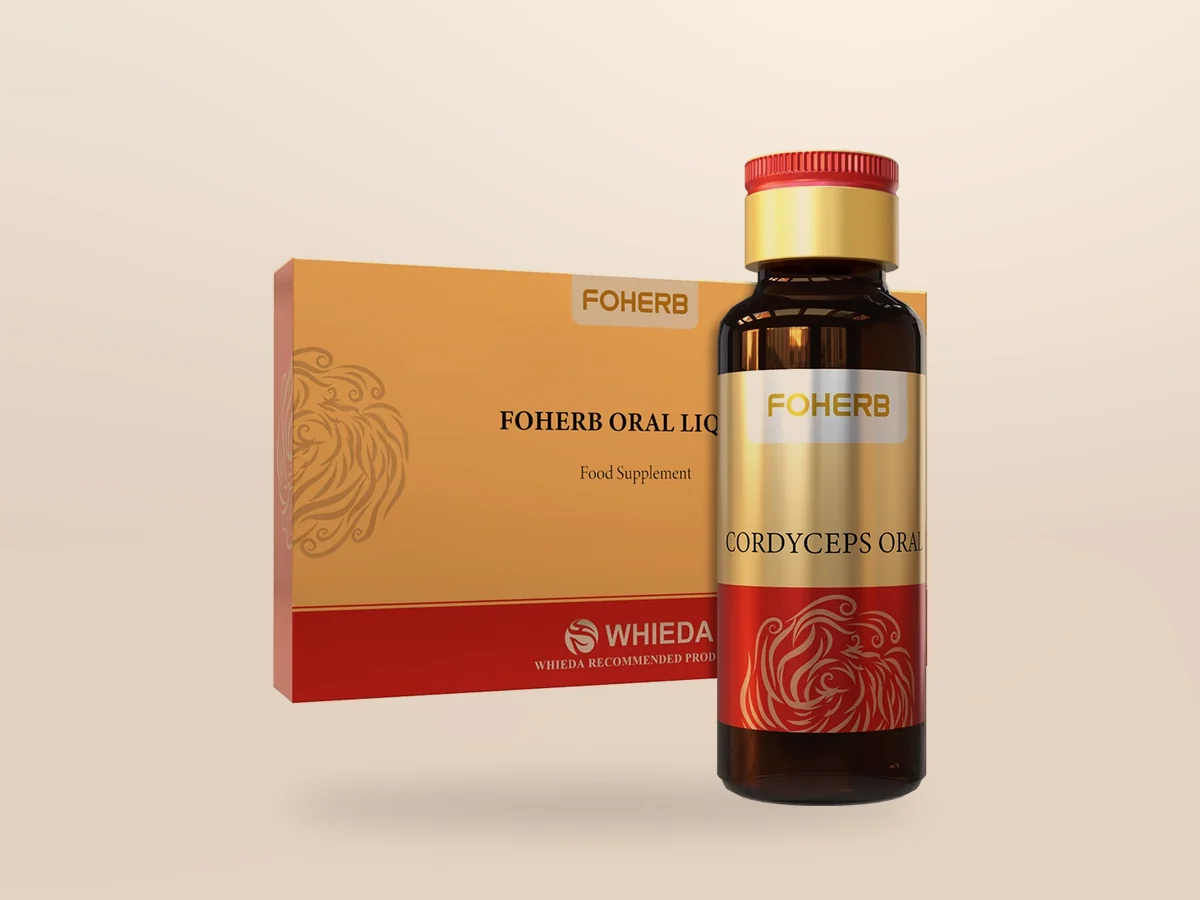
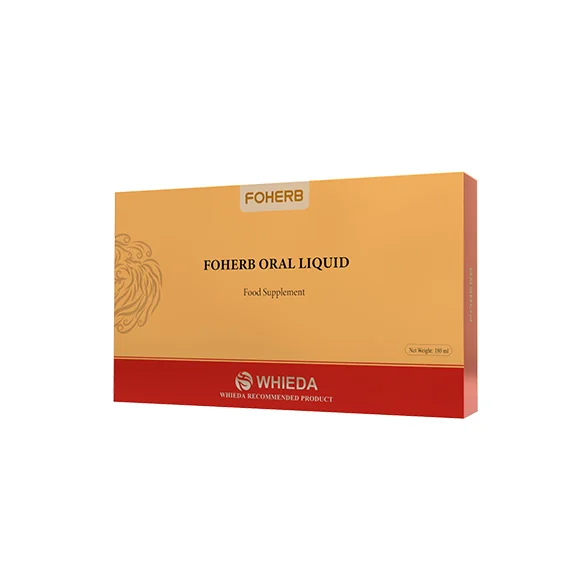
A box for 12 days
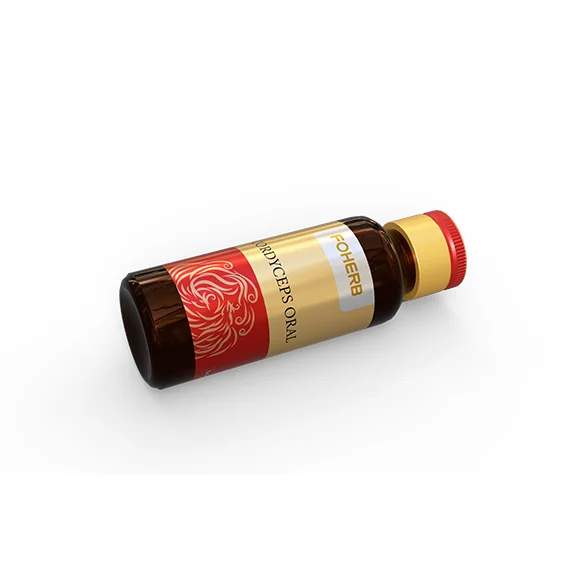
It holds six 30 ml vials.
A whole vial is small and slips into your bag: easy to take to work and open at lunch.
Honeyed, with a mushroom note, and pleasant. Half a bottle at breakfast goes down as easily as a spoonful of honey.
Pregnancy, breastfeeding, individual intolerance to the product’s components. Consulting a doctor before use is recommended. Recommendations are for adults. Contains mushrooms and honey.
CN104068379BRecipe patent
The invention “health-promoting oral liquid” with cordyceps, shiitake, lingzhi and honey. Filed in 2014, granted in 2016, in force. Open patent ↗
CN303057639SThe name “Phoenix”
A packaging design for “凤凰口服液,” “Phoenix oral liquid.” Filed on 19 June 2014, granted on 31 December 2014. So the elixir has carried this name since 2014 at the latest. Open patent ↗
CN220489530UThe culture in the name
The Paecilomyces hepiali culture in the product name, 2022. Open patent ↗
100+Over a hundred patents
The group’s companies hold more than a hundred patent documents: inventions, utility models and industrial designs. List on Google Patents ↗
GR202312000548High tech
The national “High-Tech Enterprise” certificate dated 6 November 2023 was issued by Tianjin’s science, finance and tax authorities. Certificate scan ↗
WEF · 2023“Innovation” award
The World Economic Forum’s New Champions Awards 2023 in the “Innovation” category went to the FOHERB group, which includes Fohow’s production. Among the winners listed is the group’s co-founder, Frank Li. WEF page ↗
Who’s who: Fohow is the manufacturer, a pharmaceutical factory in Tianjin. FOHERB is the group the factory belongs to and the brand on the box. WHIEDA is the company through which the elixir is sold in Russia and the CIS.
Is cordyceps still pricier than gold today?
At wholesale, no. Since 2024 gold has roughly doubled in price and overtaken the mushroom: in October 2026 a gram of gold cost about 900 yuan, while a gram of choice wild cordyceps at the Yushu wholesale market in August cost about 275. Xinhua’s wholesale index has fallen 28.9% since January 2022. At retail, the finest mushroom was pricier than gold in 2012 and again as recently as January 2024.
Where is Fohow Phoenix Elixir made?
In Tianjin, at a factory in Baodi district. It was built in 2007, with 25,928 m² of production space. In 2016 the company received a direct-selling licence from China’s Ministry of Commerce. The corporation’s products go to more than a hundred countries, with certificates from the USA, the EU and Russia: that is what the company told the China-Belarus Industrial Park “Great Stone” during a visit in April 2026. park news ↗
Does the elixir have official documents in Russia?
Yes. The elixir was registered in the EAEU on 14 May 2021, certificate number RU.77.99.11.003.R.001595.05.21. It has no expiry date. It is based on an assessment by the Federal Center for Hygiene and Epidemiology of Rospotrebnadzor. open PDF ↗
What does it taste like?
Honeyed, with a mushroom note, and pleasant. In the formula, honey sits right next to three mushrooms: cordyceps, lingzhi and shiitake.
How long does a box keep?
Shelf life is 24 months. Store out of the reach of children.
A culture of Tibetan cordyceps, the spirit mushroom of the imperial books, shiitake and the honey that brings them together, all in one vial.
A box of six vials costs 3,300 ₽, about 275 ₽ a day. You can check whether it’s in stock right now on the product page.